Yongle Education/Our Story

Our Story

Yongle Education wasn't built in a day —
it grows from over 30 years of systematic groundwork in Zhejiang University's innovation-design education
, and from the first moment in the AI era when
creativity education could systematically enter the growth of K12 young people.

IOUR MISSION

Let every child
find, in creation, their passion and value
, and become the creator of their own life

YONGLE EDUCATION
IITHE NAME

Why Yongle

The two characters “Yongle” don't mean a passing happiness
. They point to something deeper — a long-lasting steadiness born of understanding, creation and self-growth.
The ability to stay unshaken inside, even as the world keeps changing.

In Chinese history, “Yongle” carried two remarkable things.

EVENT · 01 · knowledge engineering

The Yongle Encyclopedia

It was a vast feat of knowledge engineering — that era's most systematic organization of human knowledge, civilization's most complete act of transmission.

The Yongle Encyclopedia was that era's “large model.”

And today's AI large models are precisely our generation's “Yongle Encyclopedia” — human wisdom once again gathered, organized and awakened as never before, bringing a whole new range of possibilities.

EVENT · 02 · opening to the world

Zheng He's voyages

They stand for a vision opened to the world — the courage to go out, to see a larger world, to connect with others.

The young people of this era still need that courage to “set sail.”

Only this time, what they board isn't a ship but AI; where they sail isn't a distant land, but every possibility humanity has not yet created.

Six hundred years apart, the two are doing the same thing —
handing the wisdom humanity has accumulated to the next generation.

We chose the name “Yongle” not because it's retro, nor because it sounds cultured.

What we value is the core that still holds true today —

in an age of accelerating change, answers at your fingertips, and vanishing certainty, what is a person's most precious ability?

  • It is:staying inwardly steady
  • It is:a lasting hunger to learn
  • It is:the creativity to keep turning ideas into reality

This is what we want to teach the young —

not the tension drilled in by “rat-race” pressure, nor the lightness of being spoiled — but a state they can carry for life, their own ever-joyful

If a child can enter the “flow of creation” at twelve,
they may carry a joyful state of mind for life.

IIIA LETTER · to parents

To parents thinking about
their child's future

I thought about this letter for a long time before writing it.

Over the past few years I've worked on applying AI in enterprise settings, and taught people from all kinds of backgrounds — students as young as 6 and as old as 60; frontline workers, executives, professionals, and government officials.

These experiences let me watch up close what happens when AI truly enters every layer of society, every industry, every age — what chemistry it sets off with people.

Two things grew clearer and clearer.

First, this generation of AI large models is, in essence, a “general knowledge model.”It can read, understand, summarize, express, reason and generate — so the first thing it disrupts is exactly the “knowledge education” we knew best.

Second, in many adults' worlds, AI runs against the grain.Adults have formed their own knowledge structures, work habits, identities and path dependencies. AI's arrival brings not only efficiency, but anxiety, resistance, and a sense of being replaced.

But in children and teenagers, I saw a completely different reaction.

To them, AI isn't necessarily a cold tool, but more like a companion they can talk to, that keeps them company and helps turn ideas into reality.Adults have to relearn AI; the young may, from the very start, see AI as simply part of the world.

But AI is also like fire.

Handled well, it amplifies human ability; handled badly, it can devour a person's judgment, attention and agency.

So the real question of this era is no longer “can you use AI,” but — in a new age where humans and machines collaborate and coexist:

what makes a human human?

This question, AI will not answer for us.


I believe, more and more, that education in the AI era isn't about “teaching children how to use AI” at all — it's about using AI's arrival to return to the human being itself.

As machines grow better at remembering, expressing, generating and executing, education must answer all the more —how should human curiosity, judgment, creativity, responsibility and sense of value be protected, sparked and grown?

find, in human-centered education, one of the most precious abilities is creativity

The stronger AI gets, the more valuable the creativity that truly belongs to humans.


I myself was, in fact, raised in very good educational soil — my creativity protected and lifted. I'm one of the greatest beneficiaries of this kind of education.

In 2007 I entered Zhejiang University's College of Computer Science, industrial design. That education was a turning point of my life.

Looking back today, the industrial-design track I was in has grown, in a new era, into the cross-disciplinary major of “Intelligent Engineering & Creative Design”, and entered the talent system of ZJU College of Computer Science & AI. That itself says something —design, engineering, AI and creativity are fusing ever more deeply

From 2007 to 2011, we stood right at the eve of the mobile-internet explosion

Back then we could already feel technology, business and the internet profoundly reshaping traditional art, design, manufacturing and industry. Our teachers realized early on —future talent can't master just one discipline; it must have the integrative, cross-disciplinary, cross-system ability to innovate

So our teachers boldly explored a new generation of programs, exchanging with leading schools around the world, and gradually formed the philosophy of “Integrated Innovation Design.”Academician Pan Yunhe further put forward a new understanding of innovation design — that it isn't a single-dimensional skill, but a composite system made of humanity · technology · art · culture · business.

These five dimensions shaped me deeply.

They made me understand —real creation isn't showing off a single skill, but a composite ability. A good creator must understand technology and people; have taste and grasp business; be able to make things and know why they make them; solve real problems and hold cultural awareness and value judgment.

Around 2010, Zhejiang University and the Singapore University of Technology and Design (SUTD) formed a partnership, joining the educational exploration of this new design-and-technology university MIT with deep MIT support. To me, that was an important signal of the times —design education was changing worldwide; engineering, technology, the humanities and creativity were being rethought on a single educational blueprint

Since 1990, when ZJU's design discipline was founded, this soil — fusing engineering and the arts — has raised wave after wave of cross-disciplinary talent. I later interviewed many alumni one on one: some became entrepreneurs, some designers, others went into technology, education, culture and industrial innovation.

From them I felt two things deeply:

It is:An atmosphere of cross-disciplinary fusion gave them the ability to keep creating;
It is:love for their work, and the courage to follow their hearts made them who they are today.


But in the past, this kind of creativity education could mostly only be given to undergraduates and graduate students.

The reason is simple — it depended heavily on foundational skills

You had to draw, model, code, research, do user analysis, understand business models.The bar of expertise was too high, the bar of tools too high, the bar of expression too high.K12 children, however many ideas they had, could rarely turn ideas into real work, let alone real value.

So innovation education for children and teens often stayed at the level of hobbies, experiences and STEAM activities.

Until AI arrived.

These past few years I've run many experiments. We brought AI into classrooms, in front of children, and let children of different ages try using AI to create characters, generate stories, build websites, finish designs, voice opinions, construct projects

The results confirmed my judgment, again and again —

the impulse to create may come earlier than we think.

Creativity doesn't belong only to adults; it also belongs to children not yet tamed by standard answers.

Young people have never lacked creativity.What they lacked were the old tool barriers

that turned “ideas” into “real things and real value.” And this time, AI leveled many of those barriers

So —

for the first time in history, we can give a real creativity-education system to the young.

Of course, this is never about cramming compressed college courses into children (that would be wrong).

What we really want to do is let children understand the world, from a young age, through a creator's eyes

In the past, children mostly learned the answers the world had already given.
Today, we hope children will, earlier, ask their own questions.
In the past, children mostly complete standardized tasks.
Today, we hope children will try to turn their own ideas into works
In the past, children mostly adapt to the world.
Today, we hope children will gradually gain the power to create and change the world.

I often tell the children:

“Don't be just someone the world consumes.
Be someone who creates, who changes the world.”

It sounds grand, but it's actually very concrete —

when a child just scrolls short videos, plays games, and is led by algorithmic recommendations, they are being consumed by the world
But when they start using AI to create a character, build a website, design a product, tell a story, solve a real problem, they begin to become a more active person

They begin to go from consumer to creator

This is why I started Yongle Education.


Founding my own “design school” was something I thought I'd only do after retirement. AI accelerated all of it.

Because I see ever more clearly —those who can create the next brilliance of the AI era will likely not be our generation of adults, but the young who grow up alongside AI.

Not us, but them.

What our generation must do is not pass the old world's anxieties on to them, but take the most precious educational accumulation of the past thirty-plus years and translate it into a language they can understand, act on, and carry away, then hand it to them —

turning complex design methods into projects they can join.
turning Abstract innovation ideas into works they can complete.
turning High-barrier professional skills into AI tools they can call on.
turning A distant future competition into a real creative experience here and now.

I also believe, more and more —education will be one of the most important fulcrums of social fairness in the AI era.

Because AI itself can either widen the gap, or narrow it. What matters is —who understands it earlier, who masters it better, who makes it part of their own creative ability

If only a few children reach AI's creative starting line, AI will widen inequality.
But if more children, whatever their background, can use AI to unleash their creativity —then education can become this era's new fulcrum of fairness

This is the true weight of the name “Yongle.”

Yongle is more than happiness.
Yongle is letting a child gain, in creation, a lasting joy.
Yongle is letting a child gain, in real projects, discover what they love.
Yongle is letting a child become, in the AI era, a more active, freer, more creative person

If you, too, are thinking about your child's future —
we welcome you to join us in bringing your child to the starting line of creation.

So they don't just adapt to the world,
but have the power to take part in creating it the world.
Qiu Yiwu
May 2026 · Hangzhou
IVHERITAGE

The story's source begins in the 1990s.

Yongle Education's system didn't appear out of nowhere.
Behind it is a road of ZJU innovation-design education, walked for over 30 years since 1990 —
and a thirty-year transfer of experience

1990

Pioneering · the founding of ZJU's design discipline

Zhejiang University's design discipline was founded in 1990 — proposed by then-president Academician Lu YongxiangAcademician Pan Yunhe, with Academician Pan Yunhe leading the founding of the “Institute of Modern Industrial Design”, and establishing the industrial design major

Crucially, this major was placed, from the very beginning, in Zhejiang University's College of Computer Science & Technology — not a traditional fine-arts or art school.

From that moment, ZJU design started not from “craft and drawing,” but from the intersection of computer graphics, CAD, AI and industrial design — the genetic code of everything for the next 30 years.

2000s

Cross-disciplinary fusion · engineering and the arts

Design began to fuse with computing, human factors, psychology and other disciplines, gradually forming ZJU design's unique gene —“the fusion of engineering and the arts”

A group of teachers who would later play key roles in China's innovation-design education grew up within this system.

2011

ZJU International Design Institute · ZJU IDI · going global

That year, Singapore was building a new national university for the 21st century — today's SUTDSingapore University of Technology and Design (SUTD). At the time, MIT and Zhejiang University's design-education philosophies together won Singapore's recognition.

To systematically take on this international partnership and, alongside MIT, deeply support the founding of SUTD, the ZJU International Design Institute (ZJU IDI) was formally established in November 2011

Afterward, ZJU IDI took on the building of a design PhD program, joined industrial and product design undergraduate programs as well as design and industrial-design-engineering master's programs — growing into the core platform that took ZJU innovation-design education global and systematic.

Over 30+ years, this system has raised a large body of cross-disciplinary creators across every field

2014

China Innovation Design Industry Strategic Alliance · toward national strategy

The China Innovation Design Industry Strategic Alliance was founded —Academician Lu Yongxiang serving as chair of its first council, with Academician Pan Yunhe as president.

From then on, the influence of ZJU innovation-design education reached beyond campus — into national innovation strategy, industrial upgrading, and design empowering the real economy.

2025

Zhejiang University College of AI · formally founded

Zhejiang University formally founded its College of AI, uniting its years of AI research, teaching and strength under one new banner.

2026

Industrial Design → Intelligent Engineering & Creative Design · merged into the College of AI

The industrial-design major that Academician Pan Yunhe placed, in 1990, into the College of Computer Science has today been formally renamed “Intelligent Engineering & Creative Design” and merged into ZJU College of Computer Science & AI

The new major's directions have expanded to smart cockpits, self-driving interaction, wearables, service robots, smart homes, intelligent learning tools and other real-world scenes —no longer just “designing a product,” but “designing future ways of living”

Perhaps it was a seed planted 30 years ago — in the genes of ZJU design, design, creation and AI always belonged together

2025 → now

Yongle Education · bringing creativity education systematically to K12 young people

From 2025, I began trying to take the accumulated innovation-design education philosophy, together with my years of practice in higher and adult education, and systematically shape them into a creativity-education framework, curriculum and product methodology

The hope is to turn this into a sustainable, creativity-building system for K12-age children, a systematic education system — and this is still very much under construction.

VRECENT

From foundation to this moment——
the road of this past year and more.

In chronological order.
Every year, every month, every new step becomes a new line in this story.

Before

The story's foundation · years of adult and enterprise AI education

From 2023, AI rose fast.ZaowuyunAs an enterprise AI solutions provider, Zaowuyun has provided AI applications, solutions and training to Li & Fung, Haier, Bosideng, Anta, Starbucks, Supor, China Mobile, Bull and Bright Dairy, among others.

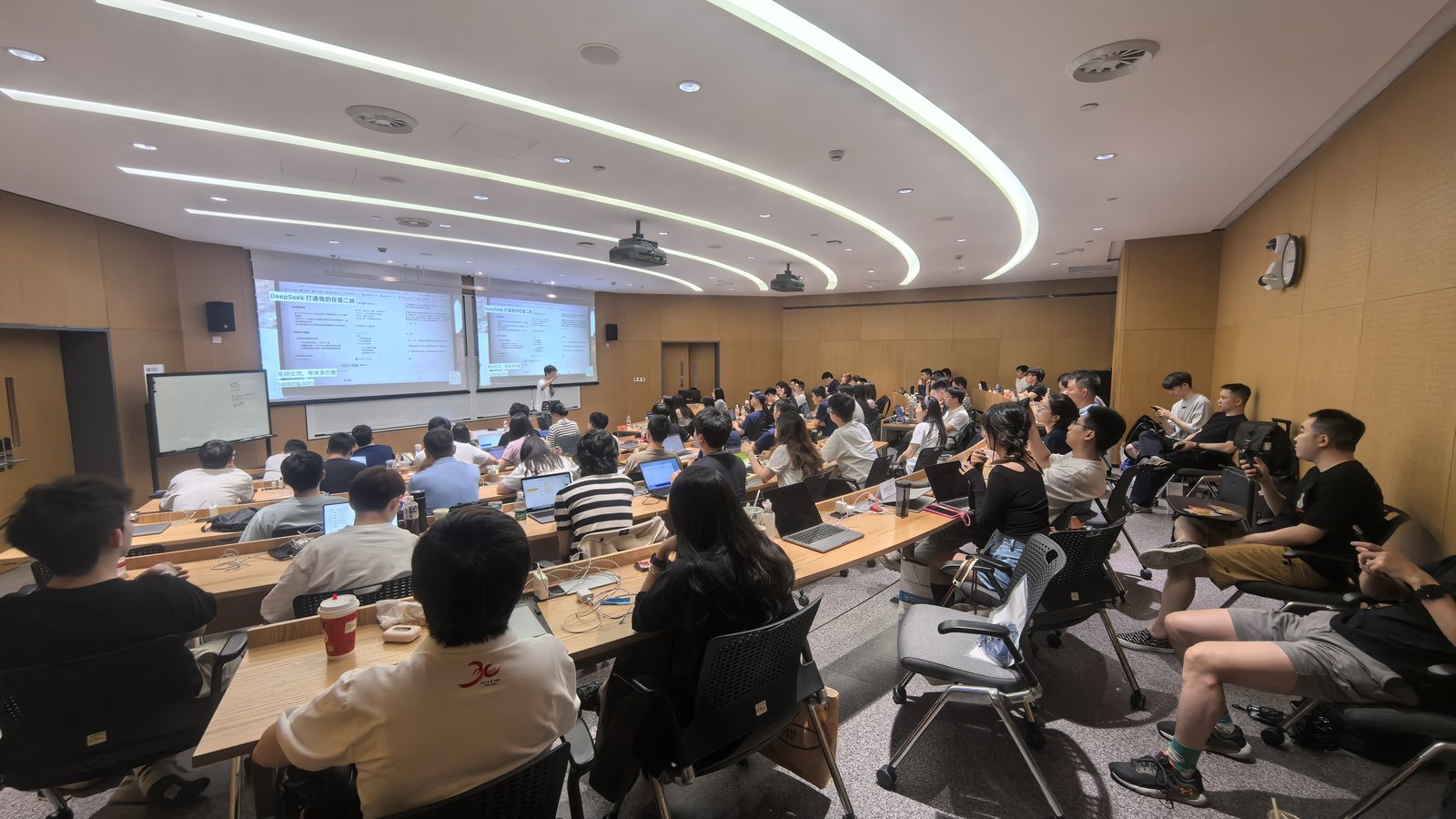
Qiu Yiwu also taught at over a dozen universities including ZJU, Xiamen and Sun Yat-sen, in their MBA and design schools; his audiences ranged from frontline staff to executives to ministry officials.

It was this accumulation that made us see clearly —those who truly master AI aren't necessarily those who learned it early, but those who learned to create.

浙大 MBA 课程 · 邱懿武授课 AI 产品创新
ZJU MBA · teaching AI product-innovation methodology

2025

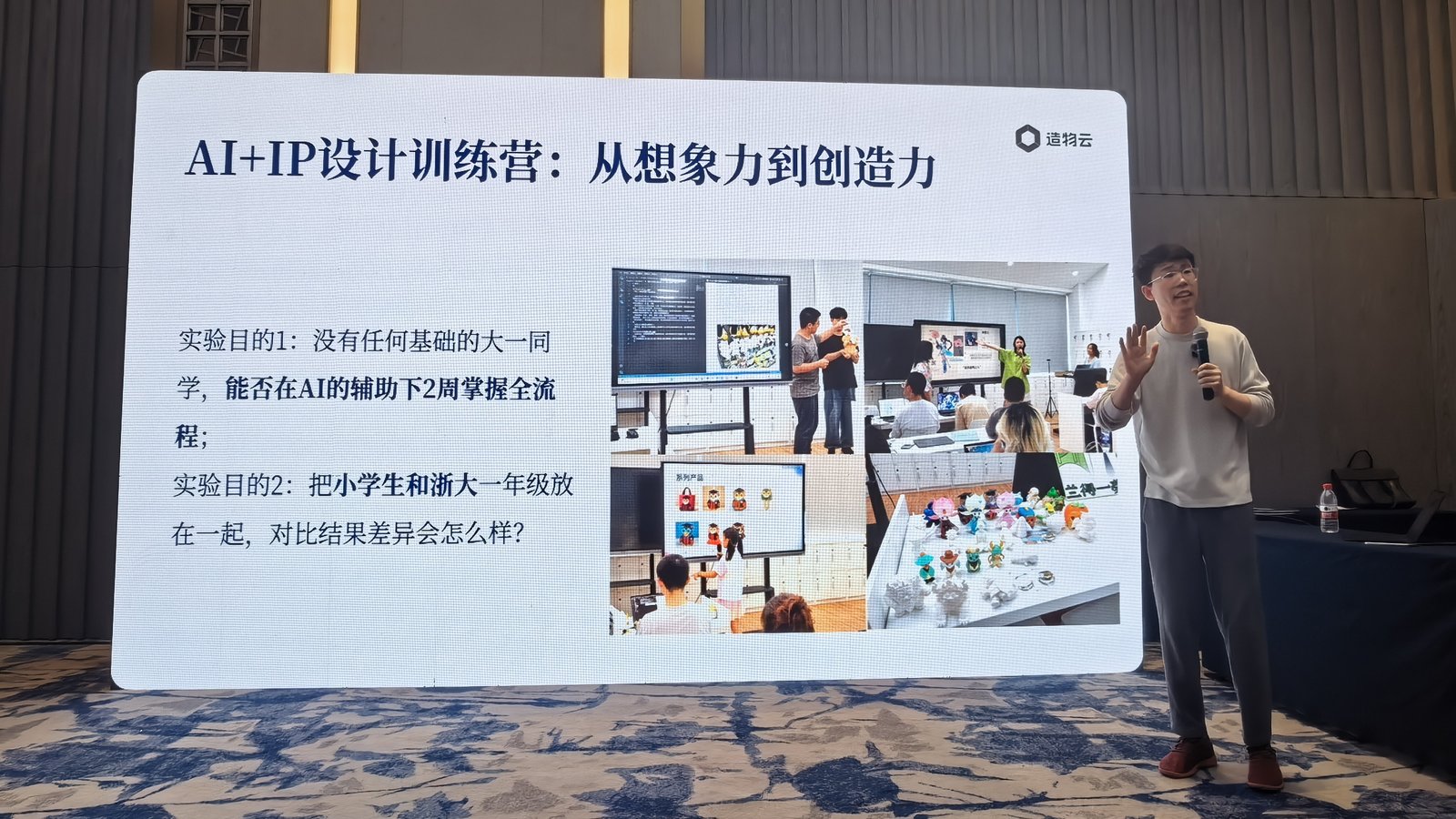
Where it all began —ZJU AI-IP bootcamp · undergraduates + primary schoolers in one classroom

The first attempt to put undergraduates and primary schoolers in the same classroom to create IP together with AI. The result surprised everyone — the children weren't slower than the undergraduates.

In that moment I realized —creativity belongs to “creative people”; AI levels most of the barriers of execution.

AI loosened the “age barrier” for the first time.This was the true starting point of Yongle Education's road.

浙大 AI IP 训练营 · 大学生 + 小学生同教室
ZJU AI-IP bootcamp · the origin

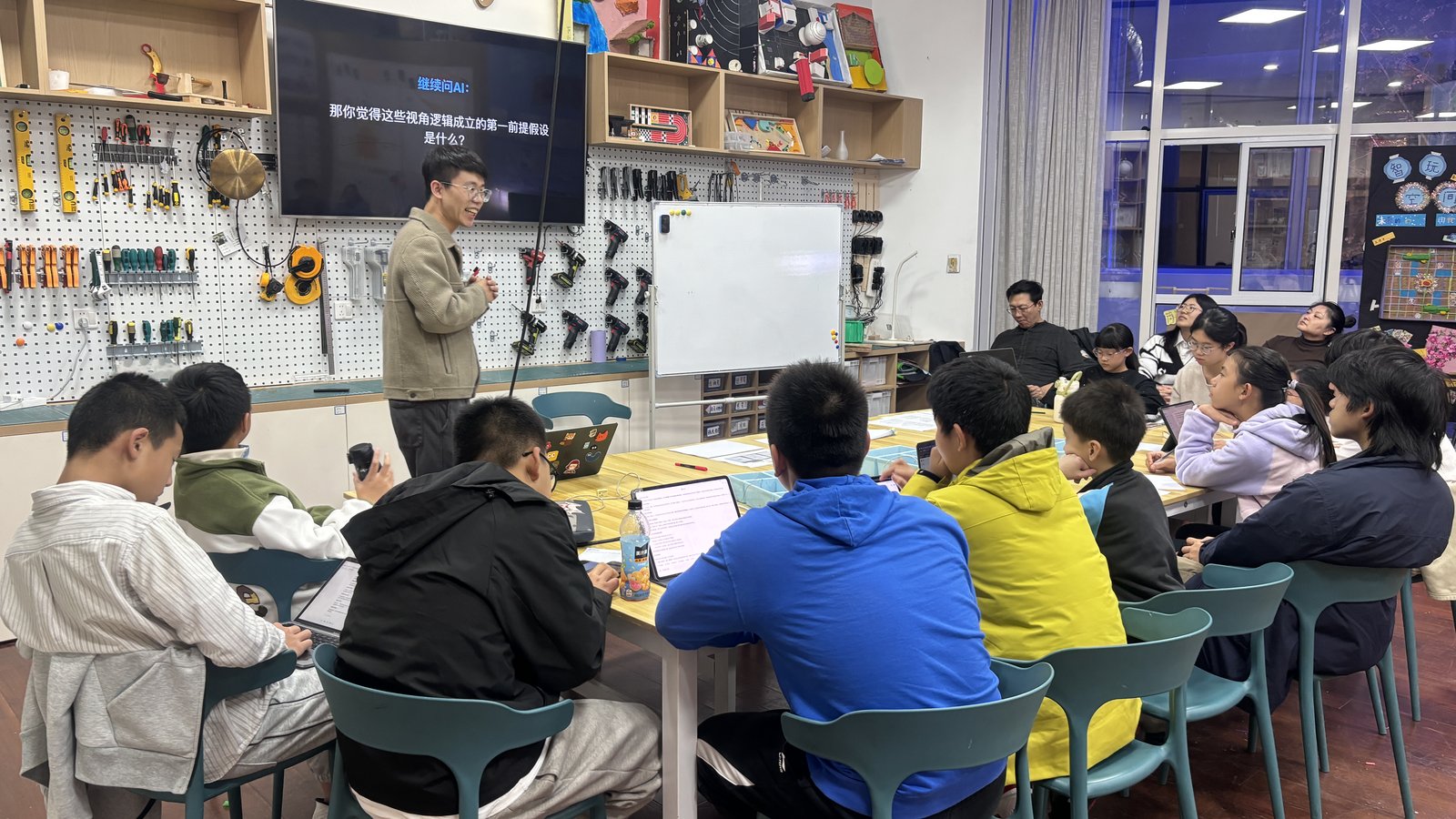
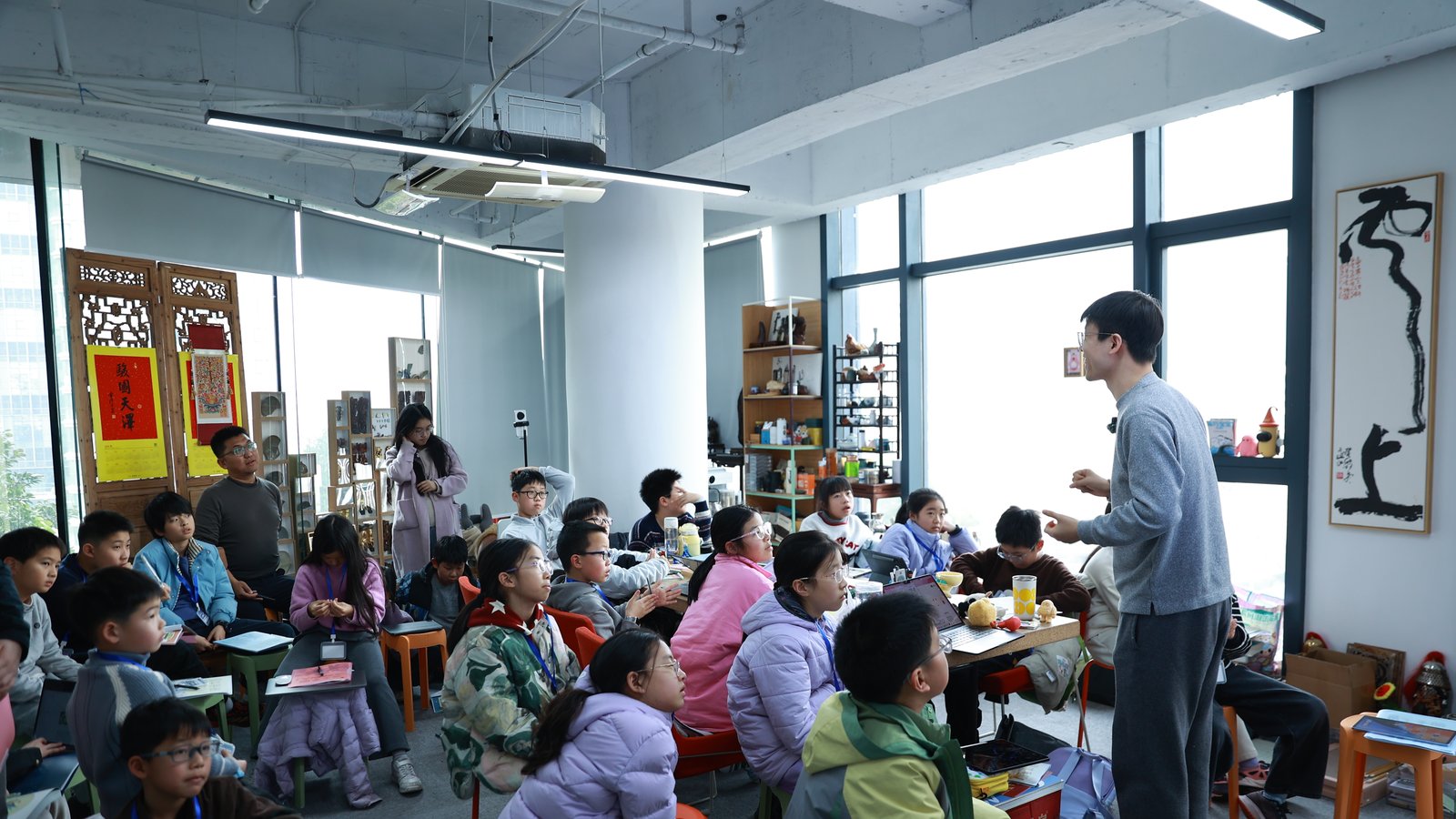
The first time bringing an AI course to primary and middle schoolers —AI intro course · creating knowledge cards

That same autumn term, I tried bringing an AI course, for the first time, to primary and middle schoolstudents — guiding them to use AI to create “knowledge cards”, turning their own ideas and understanding into work they could share.

From this teaching, I also learned —how to relate to K12 students of different ages.

2025 秋 · 小学初中 AI 入门课 · 知识卡片创作
Primary + middle school · AI intro course · knowledge cards

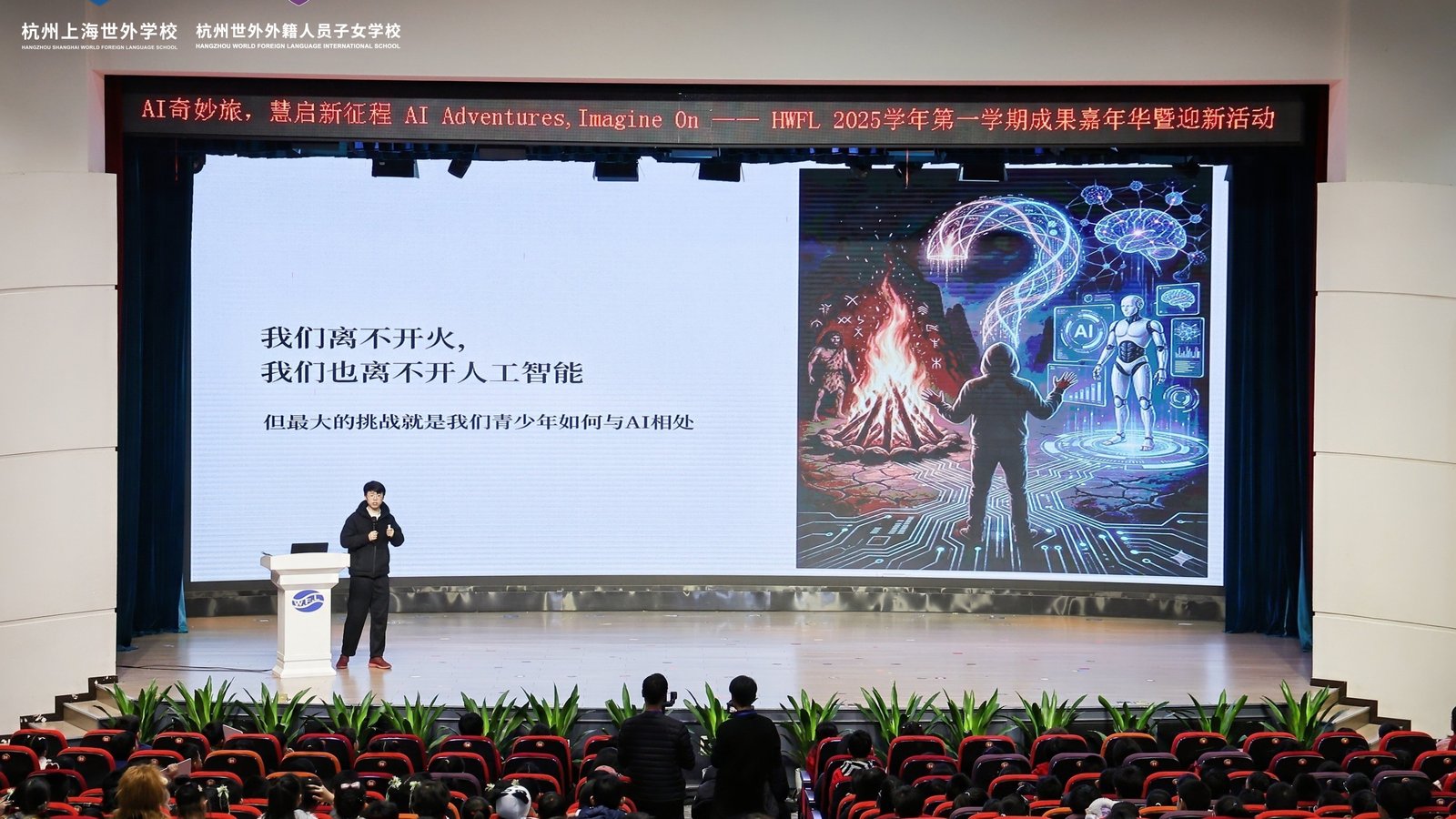
Bringing “AI-native education” into a K12 campus —Hangzhou Shanghai SWS · “An AI Wonder Journey”

I pay special attention to AI in K12 education. Invited to Hangzhou Shanghai World Foreign Language School (HWFL), I spoke to the whole school's students, teachers and parents on one core proposition —how we live with AI

AI is like fire —we can't live without fire, and won't be able to live without AI.But the greatest challenge is how to live with it. This has become one of the most important questions of this generation.

杭州上海世外 AI 奇妙旅演讲
Hangzhou Shanghai SWS · An AI Wonder Journey

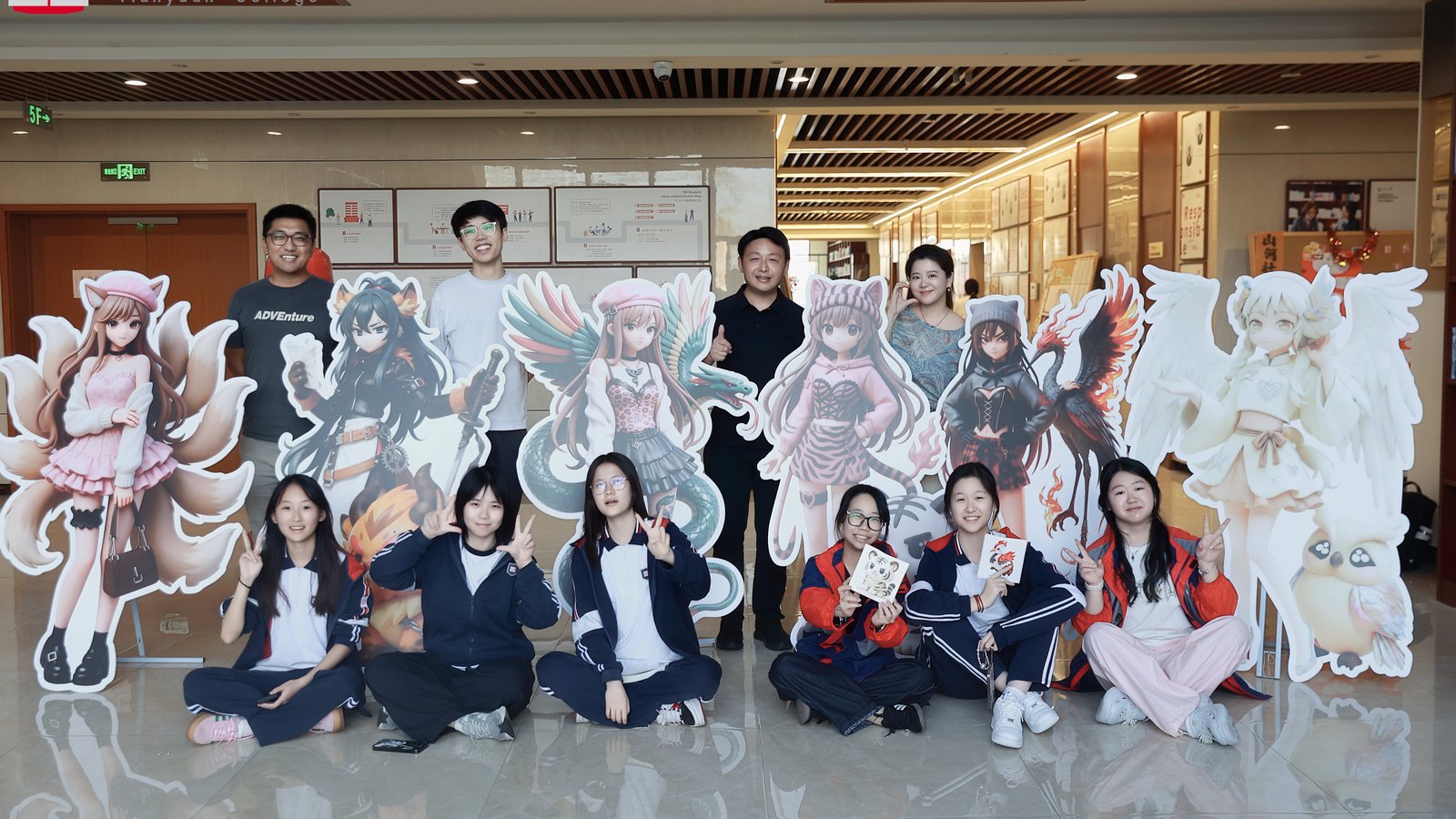
Bringing the same method into a K12 campus —Tianyuan Academy AI-IP bootcamp

We brought the same method from the ZJU AI-IP bootcamp to Tianyuan Academy——in Hangzhou, bringing content built for undergraduates down to the high-school level

This was the first time the method was validated inside a K12 system —the high schoolers exceeded our expectations.

天元公学 AI IP 训练营
Tianyuan Academy · AI-IP bootcamp

2026

Before winter break · AI-IP creation bootcamp(Season 3) · primary + middle school

The first time the full AI-IP bootcamp method was handed to primary and middle school students. They used AI to complete IP character design, worldbuilding, visual extension — turning “ideas” truly into “works.”

AI IP 创作营第三季 · 小学初中 · 王炸探索营
AI-IP creation camp · Season 3 · the breakout camp

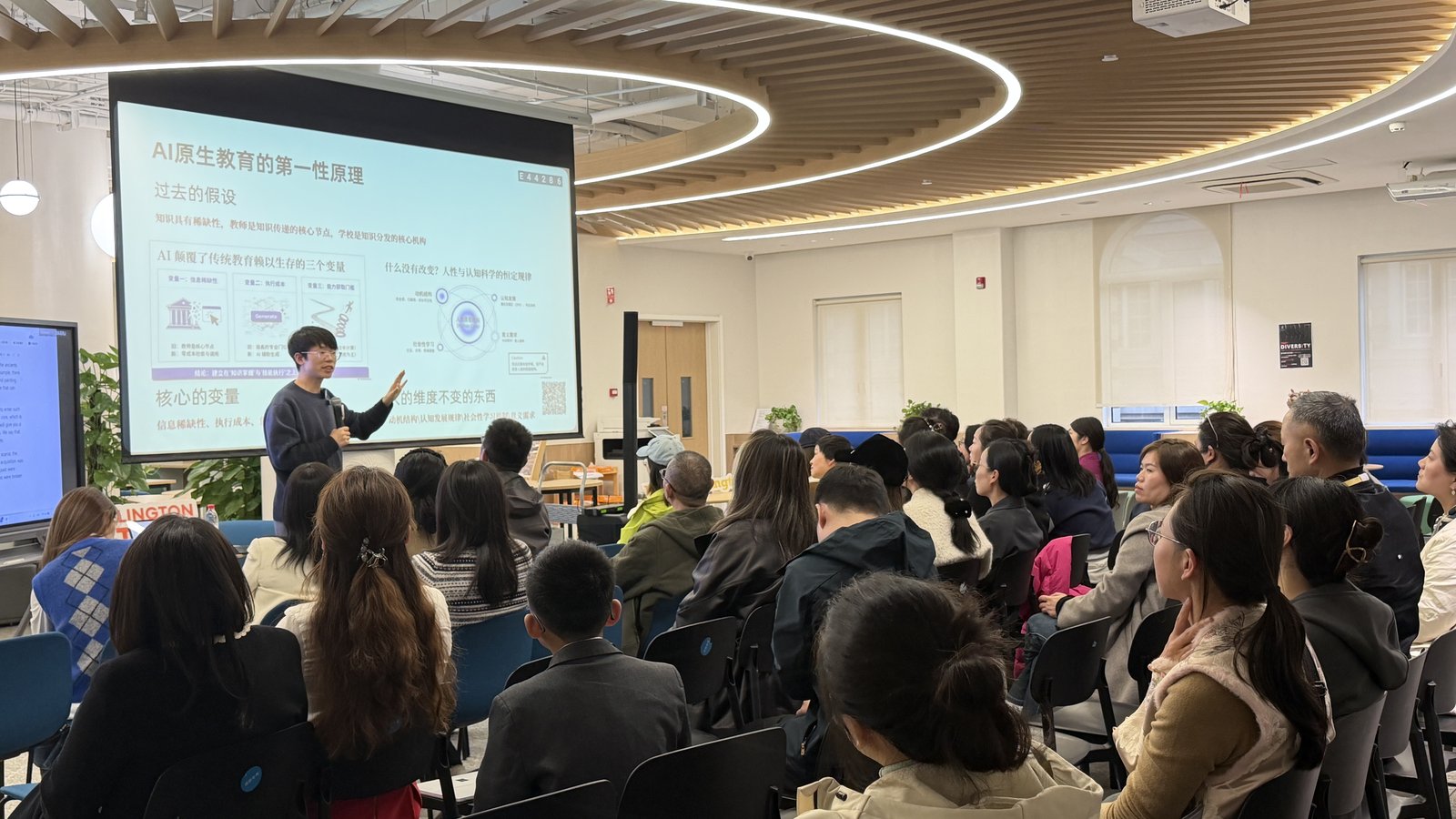
Parent co-creation · rethinking First Principleseducation for the AI era

After a period of practice, from 2026 I began to focus on AI-native educationthis. After Spring Festival, at Wellington College Hangzhou, I gathered a first group of parents to explore together —

now that AI is everywhere, what exactly is the next generation of education we want to give our children?

It was a collective rethinking that brought First Principles back to the heart of education.

家长共创会 · AI 原生教育的第一性原理
Parent co-creation · Wellington College Hangzhou

“Young CEO”project formally chartered · framework continually refined

We systematically shaped a year-plus of bootcamp experience, parent-co-creation feedback, and ZJU innovation-design methodology into Yongle Education's program.

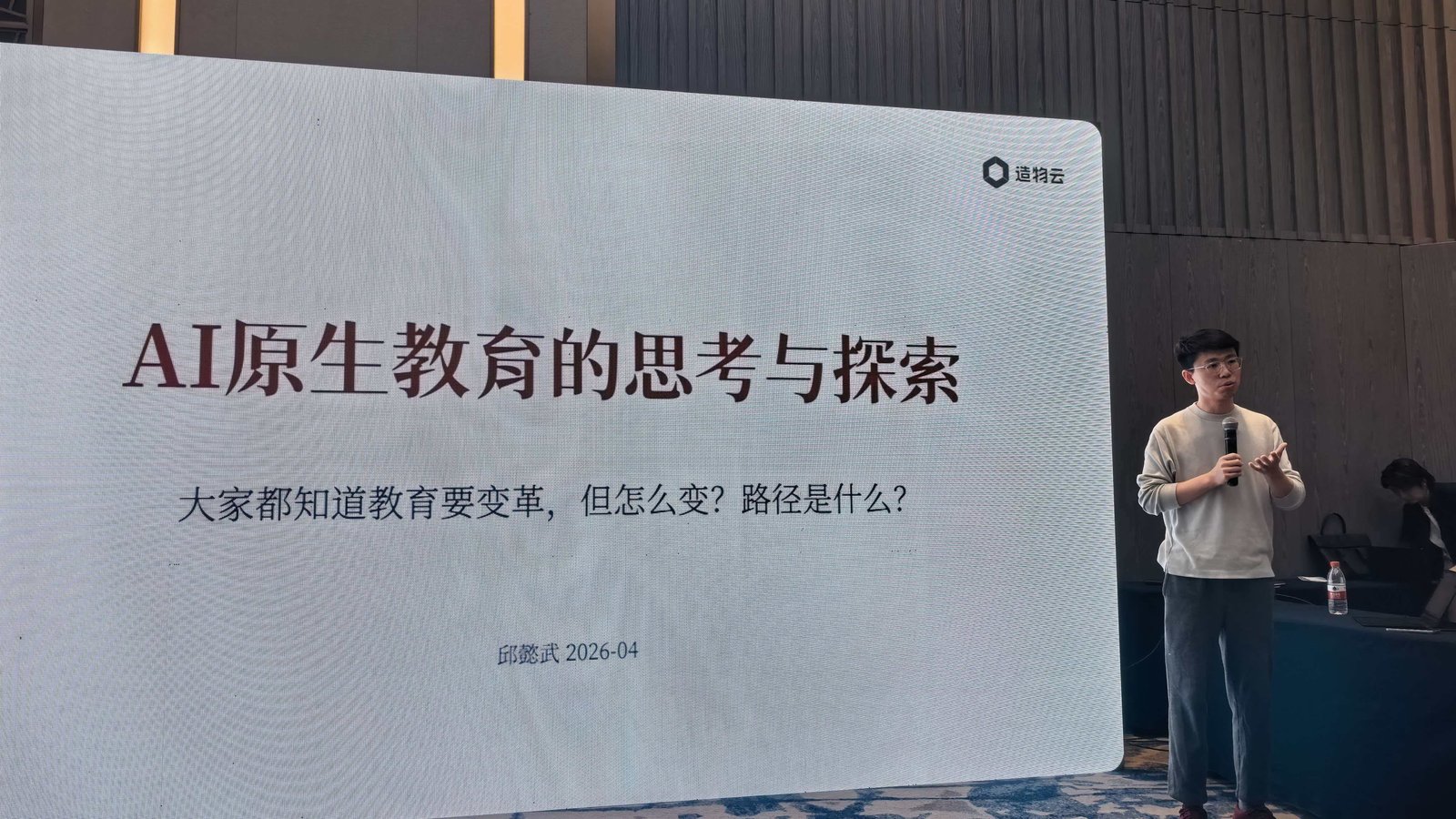
The 4th Conference on the Future of University Innovation & Entrepreneurship Education · first systematic sharing of “AI-native education

find, in the Digital-Intelligence Innovation Committee of the China Creation Society, at this conference, we shared for the first time, before the university innovation-education community, our year-plus of exploration in AI-native education — the key moment when bootcamps, co-creation sessions and education experiments were first integrated into a systematic account.

第四届高校未来创新创业教育发展大会 · 邱懿武分享 AI 原生教育的思考与探索
The 4th Conference on the Future of University Innovation & Entrepreneurship Education · 2026.04

From Wellington College Hangzhou and other schools — interviewing and selecting the first cohort of “Young CEO

Using interviews + portfolio tasks + parent conversations and more, we selected a first group of young people aligned with Yongle's philosophy.

Not selecting for grades, but for those “to be cultivated as creators.”

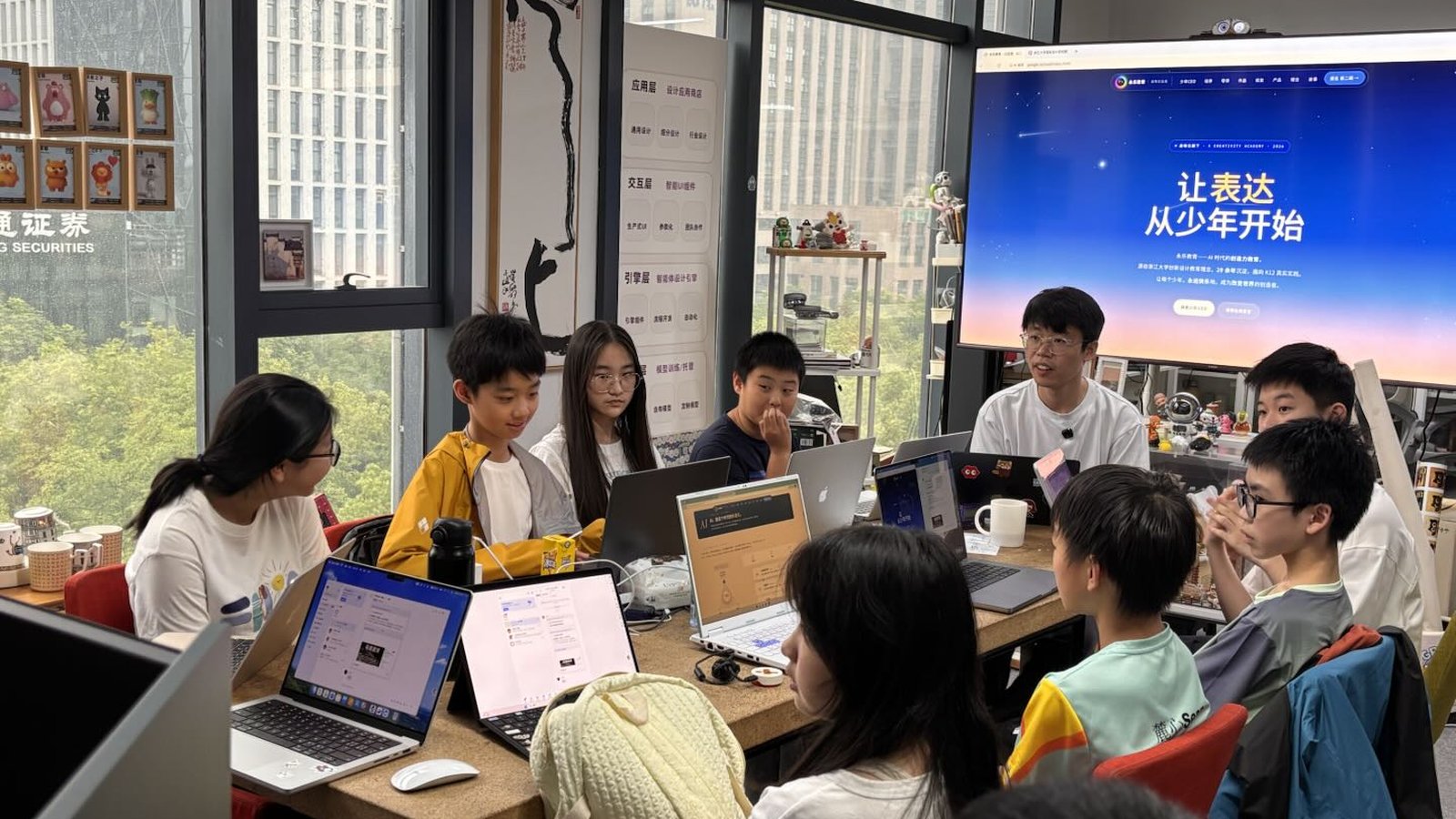
Yongle EducationFormally founded as a Zaowuyun brand · Young CEO Cohort 01 launched · yongle.school domain live

12 young people aged 9–15 arrived at Zaowuyun to begin Yongle Education's first journey. Their stories will keep being updated in the ideas column.

少年 CEO 第一期 · 第一次开课现场 · 9 位学员与邱懿武围桌讨论,背景大屏显示 yongle.school 官网
Young CEO Cohort 01 · opening day · Zaowuyun, Hangzhou

This story is still being written.
Every cohort, every project, every piece of feedback becomes a new line.

Let every child find, in creation, their passion and value, and become the creator of their own life

Partner with us · join this story →